
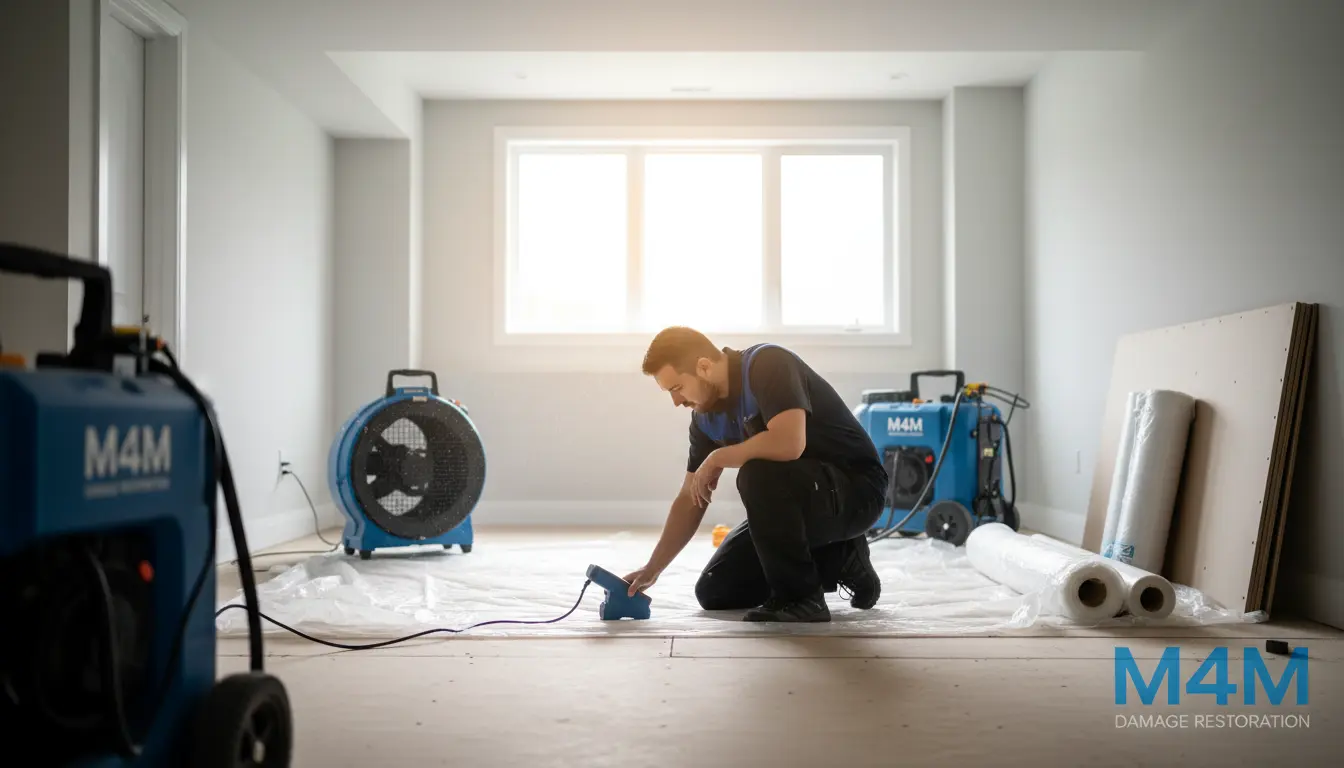
Living in Ontario means dealing with the unpredictable weather that can turn a peaceful home into a watery nightmare overnight. From sudden basement floods in Toronto during heavy spring rains to burst pipes in the harsh winter cold, water damage strikes without warning. If you’re facing this issue, you’re not alone—thousands of homeowners in the Greater Toronto Area (GTA) experience it annually. At M4M Damage Restoration, we’ve helped countless families restore their properties swiftly and effectively. This ultimate guide will walk you through everything you need to know about water damage restoration, from immediate actions to long-term prevention. Whether your home in Etobicoke or Vaughan has suffered a leak, we’re here to provide the knowledge and support you need to get back on track.
Understanding Water Damage in Ontario Homes
Water damage isn’t just about wet carpets or soggy walls—it’s a serious threat that can compromise your home’s structure, health, and value. In Ontario’s variable climate, moisture issues are common, especially in urban areas like Toronto where heavy rainfall and melting snow overwhelm drainage systems.
Common Causes of Water Damage
Ontario’s weather plays a big role. Torrential downpours in summer can lead to basement flood restoration needs, while frozen pipes in winter burst under pressure. Other culprits include leaky roofs, faulty appliances like washing machines, and even high humidity in bathrooms causing mould growth. In Toronto specifically, the city’s aging infrastructure means sewer backups during storms are a frequent issue, affecting neighbourhoods from Oakville to Pickering.
Did you know? According to local reports, water damage accounts for over 20% of insurance claims in the GTA. Ignoring it can lead to structural weakening, electrical hazards, and costly mould remediation down the line.
Types of Water Damage
Water damage is categorized into three types based on contamination levels:
- Clean Water: From a broken supply line—least harmful but still needs quick action.
- Grey Water: From dishwashers or sump pumps—contains bacteria and requires professional cleaning.
- Black Water: From sewage or flooding—highly contaminated and poses severe health risks.
Understanding the type helps determine urgency. For instance, black water in a Burlington home demands immediate evacuation and expert intervention to prevent illness.
Immediate Steps to Take After Discovering Water Damage
Time is critical—acting within the first 24-48 hours can prevent further damage and save thousands in repairs. Here’s your step-by-step action plan:
-
Ensure Safety First: Turn off electricity if water is near outlets to avoid shocks. If the damage is extensive, evacuate and call emergency services.
-
Stop the Source: Shut off the main water supply if it’s a leak. For floods, avoid using drains to prevent backups.
-
Document Everything: Take photos and videos for insurance purposes. Note the time and extent of damage—this will be invaluable when filing claims.
-
Remove Excess Water: Use towels, buckets, or a wet vac for small spills. For larger areas, like soaked carpets, professional carpet drying equipment is essential to extract moisture thoroughly.
-
Ventilate and Dehumidify: Open windows if safe, and use fans to circulate air. In humid Ontario summers, this step is crucial to start drying.
Practical tip: Avoid walking through standing water to prevent spreading contaminants. If you’re in Toronto and need rapid help, our 24/7 emergency response team at M4M Damage Restoration can arrive within the hour to assess and mitigate.
The Professional Water Damage Restoration Process
While DIY efforts are a good start, professional restoration ensures complete recovery. At M4M Damage Restoration, we follow industry standards to restore your Ontario home safely and efficiently.
Step 1: Assessment and Inspection
Our certified technicians arrive equipped with moisture meters and thermal imaging cameras to evaluate the damage’s scope. We’ll identify hidden moisture in walls or floors that could lead to mould. In Toronto’s dense urban homes, this is vital as water can seep into neighbouring units.
Step 2: Water Extraction and Drying
Using powerful pumps and industrial dehumidifiers, we remove standing water. Then comes structural drying, where air movers target walls, ceilings, and subfloors. This phase can take 3-5 days, depending on severity, and prevents warping in wooden structures common in older GTA homes.
Step 3: Cleaning and Sanitizing
Surfaces are cleaned with antimicrobial agents to eliminate bacteria and mould spores. For grey or black water, we use specialized disinfectants. Tip: In areas like Vaughan, where basements are prone to dampness, regular sanitizing post-restoration maintains air quality.
Step 4: Restoration and Repairs
Damaged materials like drywall or flooring are removed and replaced. We coordinate with contractors for seamless rebuilding, ensuring your home looks and functions like new.
Throughout, we prioritize minimal disruption—perfect for busy Toronto families. Our process aligns with IICRC guidelines, guaranteeing quality results.
Professional vs. DIY Restoration: Why Experts Matter
Tempted to handle it yourself? While small leaks might be manageable, larger incidents risk incomplete drying, leading to mould and further deterioration. Professionals have the tools, like high-capacity extractors, that homeowners lack.
In Ontario’s climate, improper drying can exacerbate issues—think persistent odours in humid summers. Hiring experts like M4M Damage Restoration not only speeds recovery but also maximizes insurance payouts through detailed documentation.
Actionable advice: If damage exceeds a few square metres or involves electrical systems, call pros immediately. For insurance claim assistance, we guide you through the process, from filing to negotiations, easing the stress.
Navigating Insurance Claims for Water Damage in Ontario
Dealing with insurers can be overwhelming, but understanding your policy is key. Most Ontario home insurance covers sudden water damage (e.g., burst pipes) but excludes gradual leaks or floods—check for separate flood coverage.
Steps to file:
- Contact your insurer promptly—delays can void claims.
- Provide our assessment report as evidence.
- Keep receipts for temporary fixes like tarps.
In Toronto, where property values are high, thorough claims prevent out-of-pocket expenses. We at M4M specialize in this, serving areas from Etobicoke to Pickering, ensuring fair settlements.
Preventing Water Damage: Proactive Tips for Ontario Homeowners
Prevention is better than cure. Here are practical strategies tailored to our Canadian context:
-
Maintain Gutters and Downspouts: Clean them twice yearly to handle Ontario’s heavy rains. In urban Toronto, ensure they direct water away from foundations.
-
Insulate Pipes: Winterize exposed pipes in attics or crawl spaces to prevent freezing in GTA cold snaps.
-
Install Sump Pumps and Backwater Valves: Essential for basements in flood-prone Burlington or Oakville.
-
Monitor Humidity: Use dehumidifiers in damp areas; aim for 30-50% levels to deter mould.
-
Regular Inspections: Schedule annual checks for roofs and plumbing, especially in older homes around Vaughan.
Tip: Smart water sensors can alert you to leaks early, giving peace of mind in our fast-paced lives.
Serving Toronto and Surrounding Areas
M4M Damage Restoration proudly serves the GTA and beyond, from the bustling streets of Toronto to the suburban charm of Pickering. Our local knowledge means we understand region-specific challenges, like Humber River flooding or Credit Valley overflows. Whether you’re in Etobicoke dealing with condo leaks or Oakville facing lakeside humidity, we’re your trusted partner.
FAQ: Common Questions About Water Damage Restoration
How Quickly Should I Act After Water Damage?
Immediately! The first 24 hours are critical to minimize damage. Delaying can lead to mould growth within 48 hours.
Will My Insurance Cover Water Damage Restoration?
It depends on the cause. Sudden events like pipe bursts are typically covered; floods may require additional policies. We offer insurance claim assistance to help navigate this.
How Long Does the Restoration Process Take?
It varies: extraction in hours, drying in days, full restoration in weeks. Our 24/7 emergency response ensures a fast start.
Can I Stay in My Home During Restoration?
For minor damage, yes, but extensive cases like black water require temporary relocation for safety.
How Can I Prevent Mould After Water Damage?
Ensure thorough drying and use antimicrobial treatments. Professional structural drying is key to eliminating hidden moisture.
Conclusion: Protect Your Ontario Home Today
Water damage can be devastating, but with the right knowledge and quick action, you can restore your home and prevent future issues. This guide has equipped you with essential steps, from immediate response to prevention tips tailored for Toronto and Ontario living. At M4M Damage Restoration, we’re committed to serving our community with expertise and care. Don’t let water woes overwhelm you—contact our team at (236) 835-0442 for professional help anytime. Your peace of mind starts with a single call.