
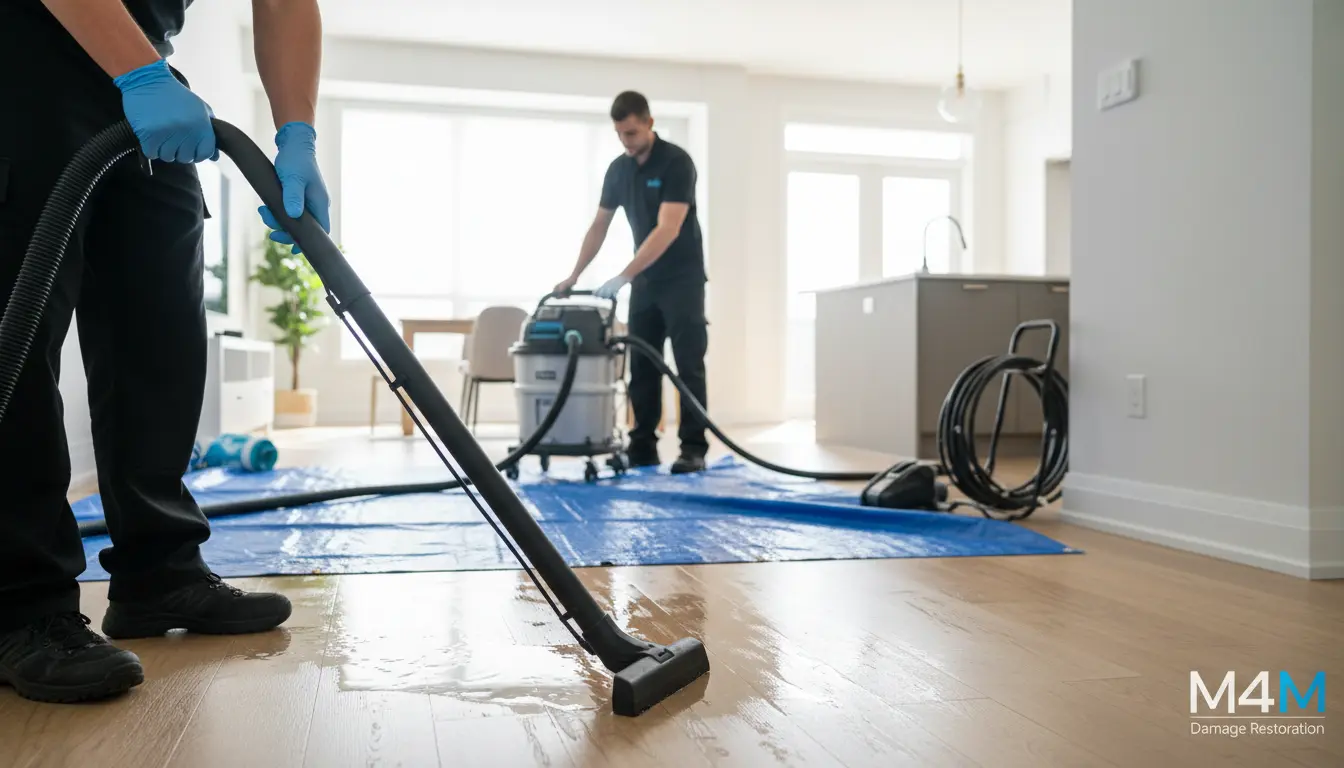
Imagine this: It’s a chilly Toronto winter evening, and you hear a ominous drip turning into a gush. A pipe has burst in your home, sending water cascading through walls and floors. Panic sets in, but fear not—taking swift action can prevent a minor mishap from becoming a major disaster. In the Greater Toronto Area, where harsh winters often lead to frozen pipes, incidents like this are all too common. As your local water damage restoration experts at M4M Damage Restoration, we’re here to guide you through the immediate steps to minimize harm and get your home back to normal.
This blog post outlines practical, actionable advice tailored for Toronto homeowners. From shutting off the water to calling in professionals, we’ll cover everything you need to know. Remember, time is critical—every minute counts in preventing further damage, mould growth, and structural issues. Let’s dive in.
Immediate Actions: Stop the Flood First
The first moments after discovering a burst pipe are crucial. Your goal is to halt the water flow and contain the damage as much as possible. Acting quickly can save you thousands in repairs.
1. Shut Off the Main Water Supply
Locate your home’s main water shut-off valve immediately. In most Toronto homes, this is found in the basement, utility room, or near the water meter. If you’re in a condo in Yorkville, it might be in a utility closet. Turn the valve clockwise to stop all water flow to your home. If you can’t find it or are unsure, avoid guessing—call a professional right away.
Pro tip: In Toronto’s older homes, especially in areas like High Park, pipes may be outdated and prone to bursts due to freezing temperatures. Familiarize yourself with your shut-off valve location now, before an emergency strikes. Once off, flush toilets and run faucets to drain remaining water from the lines.
2. Contain the Water Spread
Grab towels, buckets, and mops to soak up standing water. If the burst is in the basement, use a wet/dry vacuum if available. Block off affected areas with plastic sheeting or doors to prevent water from spreading to unaffected rooms. In multi-level homes common in Mississauga suburbs, ensure water doesn’t seep downstairs.
Don’t forget electrical safety: Unplug appliances and avoid using outlets near the water. Toronto’s hydro system is reliable, but water and electricity don’t mix—stay safe to avoid shocks.
Assessing the Damage: What to Look For
Once the immediate flow is stopped, take stock of the situation. This helps you understand the extent of the issue and prepare for restoration.
Inspect Visible Areas
Check walls, ceilings, floors, and furniture for water saturation. Look for bulging drywall, warped flooring, or pooling water. In Toronto’s humid summers, even small leaks can lead to hidden damage, so pay attention to baseboards and carpets.
Document everything with photos and videos for insurance purposes. Note the time of the incident and any initial steps taken—this will streamline your claim process with providers like those common in the GTA.
Hidden Dangers: Beyond the Surface
Water can travel far and fast. Probe behind walls with a screwdriver to check for moisture. In basements, which are prevalent in Richmond Hill homes, water can undermine foundations. If you suspect extensive spread, it’s time to bring in experts for emergency water removal.
Be vigilant for signs of structural compromise, like sagging ceilings. Toronto’s building codes are strict, but older properties in The Beaches area may have vulnerabilities from age and weather exposure.
Cleaning Up Safely: DIY vs. Professional Help
While you can handle minor cleanup, burst pipes often require more than a mop and bucket. Prioritize safety and health.
Initial Cleanup Steps
Ventilate the area by opening windows and doors, weather permitting. In Toronto’s variable climate, use fans to circulate air and speed drying. Remove saturated items like rugs and furniture to a dry area or outdoors if possible.
Wear protective gear: Rubber gloves, boots, and a mask to avoid contaminants. Water from bursts can carry bacteria, especially if it’s from supply lines.
For practical tips on preventing future moisture issues, explore our guide on preventive moisture control. This proactive approach is essential in Toronto’s freeze-thaw cycles.
When to Call in the Pros
If the water covers more than a few square feet or involves grey/black water (from sewers), stop DIY efforts. Contact M4M Damage Restoration at (236) 835-0442 for rapid response. We’re equipped to handle everything from extraction to drying, serving areas like Yorkville and beyond.
Professionals use industrial dehumidifiers and moisture meters to ensure complete drying, preventing mould remediation services down the line. Delaying can lead to costly wall and ceiling repair, especially in heritage homes in High Park.
In fact, for basement incidents common in Mississauga, our basement flood restoration team specializes in quick, thorough recovery.
Preventing Future Bursts: Toronto-Specific Advice
Toronto’s climate—bitter winters and humid summers—makes pipe bursts a seasonal hazard. Insulate exposed pipes in unheated areas like garages or crawl spaces. In colder neighbourhoods like Richmond Hill, consider pipe heating cables for extra protection.
Schedule regular maintenance, including drain inspections. Toronto’s hard water can lead to buildup, exacerbating issues. If you’re in The Beaches, where salt air from Lake Ontario adds corrosion risks, annual checks are vital.
Stay informed about local weather alerts from Environment Canada, as sudden thaws can pressure pipes.
FAQ: Common Questions About Pipe Bursts in Toronto
What Causes Pipes to Burst in Toronto Homes?
Freezing temperatures are the primary culprit, especially during cold snaps when pipes in exterior walls or uninsulated spaces freeze and expand. Poor insulation, outdated plumbing, and water pressure issues also contribute.
How Long Does It Take for Mould to Grow After a Burst Pipe?
Mould can start growing within 24-48 hours in damp conditions. That’s why prompt drying is essential—contact us for fast mold remediation services if needed.
Will Insurance Cover a Burst Pipe in My Toronto Home?
Most homeowners’ policies cover sudden bursts, but not gradual leaks. Document everything and file a claim promptly. We’re experienced in working with Toronto insurers to make the process smooth.
Can I Fix a Burst Pipe Myself?
Minor leaks, maybe—but full bursts require plumbing expertise to avoid further damage. For safety, call professionals, especially in multi-unit buildings common in Yorkville.
How Quickly Should I Call for Water Damage Restoration?
Immediately! The first 24 hours are critical to prevent secondary damage like mould or rot. Reach M4M Damage Restoration at (236) 835-0442 for 24/7 emergency service across the GTA.
Conclusion: Restore Your Peace of Mind Today
A burst pipe is stressful, but with these quick steps—shutting off water, containing the spread, assessing damage, and seeking professional help—you can mitigate the impact. In Toronto’s demanding environment, partnering with experienced restorers like M4M Damage Restoration ensures your home is back to its best.
Don’t let water damage linger. Call us at (236) 835-0442 for expert emergency water removal and restoration services tailored to your neighbourhood, whether in High Park, Mississauga, or elsewhere. We’re committed to serving the Greater Toronto Area with speed, care, and Canadian professionalism. Act now—your home deserves it!